
Hybrid AI video production: what to shoot and what to generate

The most useful question in hybrid AI video production is often a small one: which part of this shot needs to be real?
A product label may need to remain exact. A person’s performance may carry the emotion. The environment around them might be open to invention. Treating these as separate decisions gives a brand more control than choosing between an entirely filmed campaign and an entirely generated one.
Our introduction to hybrid AI video production explains how real photography, live action and generated worlds can work together. This article goes a step further: a practical way to decide what to shoot, what to generate and where to keep a fallback.
What does hybrid video production mean here?
Here, hybrid video production means combining filmed or photographed material, generative AI and conventional post-production within one campaign. Elsewhere the term can describe mixed live and remote crews, or production for hybrid events. Make the intended meaning clear when briefing a supplier.
The interesting development is that the choice increasingly happens within a shot. An editor might extend a moment, an artist might develop an environment from a reference frame, and a compositor might preserve the original product. The finished image can contain several production methods without needing to advertise the technique.
Adobe’s Generative Extend documentation shows one narrow example: generating additional material around an edit. It also lists important limits, including that the feature cannot create or extend spoken dialogue. A useful capability is not a promise that any missing performance can be invented later.
Start with three decisions for every shot
1. What must stay exact?
List the parts that need reliable fidelity: packaging, logos, product geometry, approved wording, a recognisable person or a genuine demonstration. These become the shot’s fixed elements. Their accuracy should be judged against an approved reference, not whether the image looks plausible at first glance.
A beautifully rendered bottle with the wrong cap is still the wrong bottle. Preserve an accurate filmed element, use a controlled 3D asset or plan a conventional compositing route where necessary. Do not ask a generation model to improvise something the customer is meant to evaluate as evidence.
2. What can change?
Identify the creative freedom: background, atmosphere, scale, lighting treatment or a clearly fictional setting. Write down what that freedom contributes to the idea. A generated landscape should help communicate the brand’s proposition rather than simply make the frame busier.
For an illustrative office scene, the desk and presenter might stay fixed while the view through the window becomes an impossible landscape. That is a different technical problem from generating a presenter handling a detailed product in a moving close-up.
3. What will make us reject it?
Define failure before producing variations. A face changing between frames, an unreadable label, inconsistent hands or light that contradicts the original plate can all be reasons to stop. The test should include the actual delivery size and playback speed, with sound, rather than a single flattering still.
Approve a short representative test before committing the whole campaign to the method. The most difficult moment is usually more informative than the easiest wide shot.
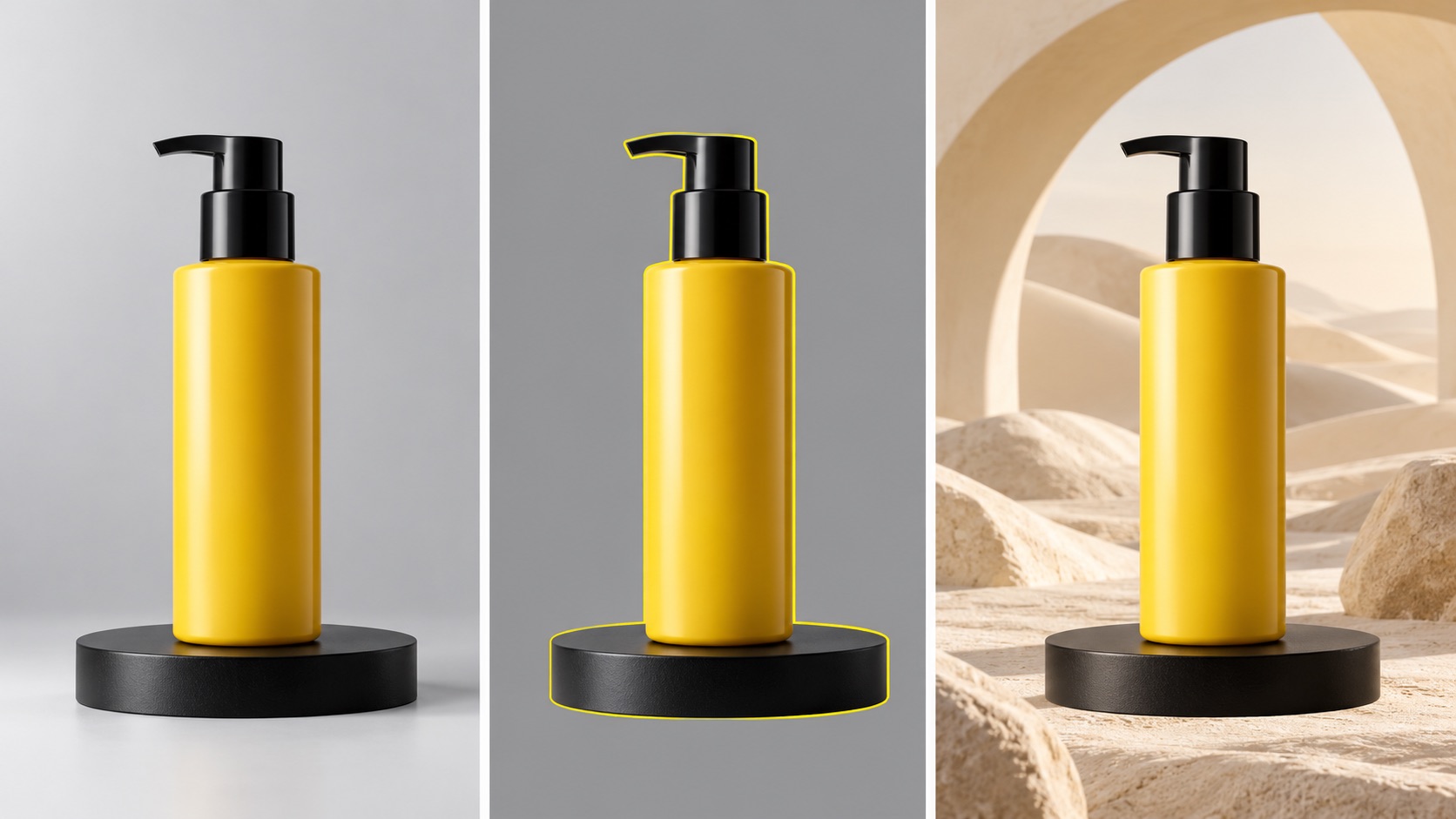
AI-generated illustration: keep the product fixed while exploring the world around it. These are illustrative frames, not a real product shoot.
Build a shot list that includes the fallback
For each shot, record the message, fixed elements, flexible elements, proposed method, reviewer and fallback. This turns “we will fix it with AI” into a decision somebody can estimate and approve.
- Founder explaining a service: film the delivery; explore a generated setting around it; retain a clean filmed version if the treatment distracts from the explanation.
- Accurate product demonstration: shoot the action and product; use generated material for a separate imaginative transition rather than altering evidence of how the product works.
- Abstract launch sequence: develop approved reference frames, test generated movement and finish with controlled typography and branding.
- Local market version: agree which language, performance and background details can change; review the result with a fluent local reviewer and check synchronisation.
These are planning examples, not claims about results from a particular campaign. The point is to match the production method to the job of the shot.
Approve the frame before the movement
Generating motion before agreeing the composition can multiply revisions. Start by resolving the person, product, background, perspective and lighting. Then ask how much movement the idea actually needs.
Runway documents reference-based image creation for developing recurring characters and scenes. References can guide consistency; they do not remove the need to review each output. Save approved references and keep a record of the tool and settings used so that later changes have a clear starting point.
Once movement is approved, judge the sequence in the edit. Two good individual clips can still contradict each other through eye lines, scale or camera direction. Editing, sound, colour and compositing remain part of production.
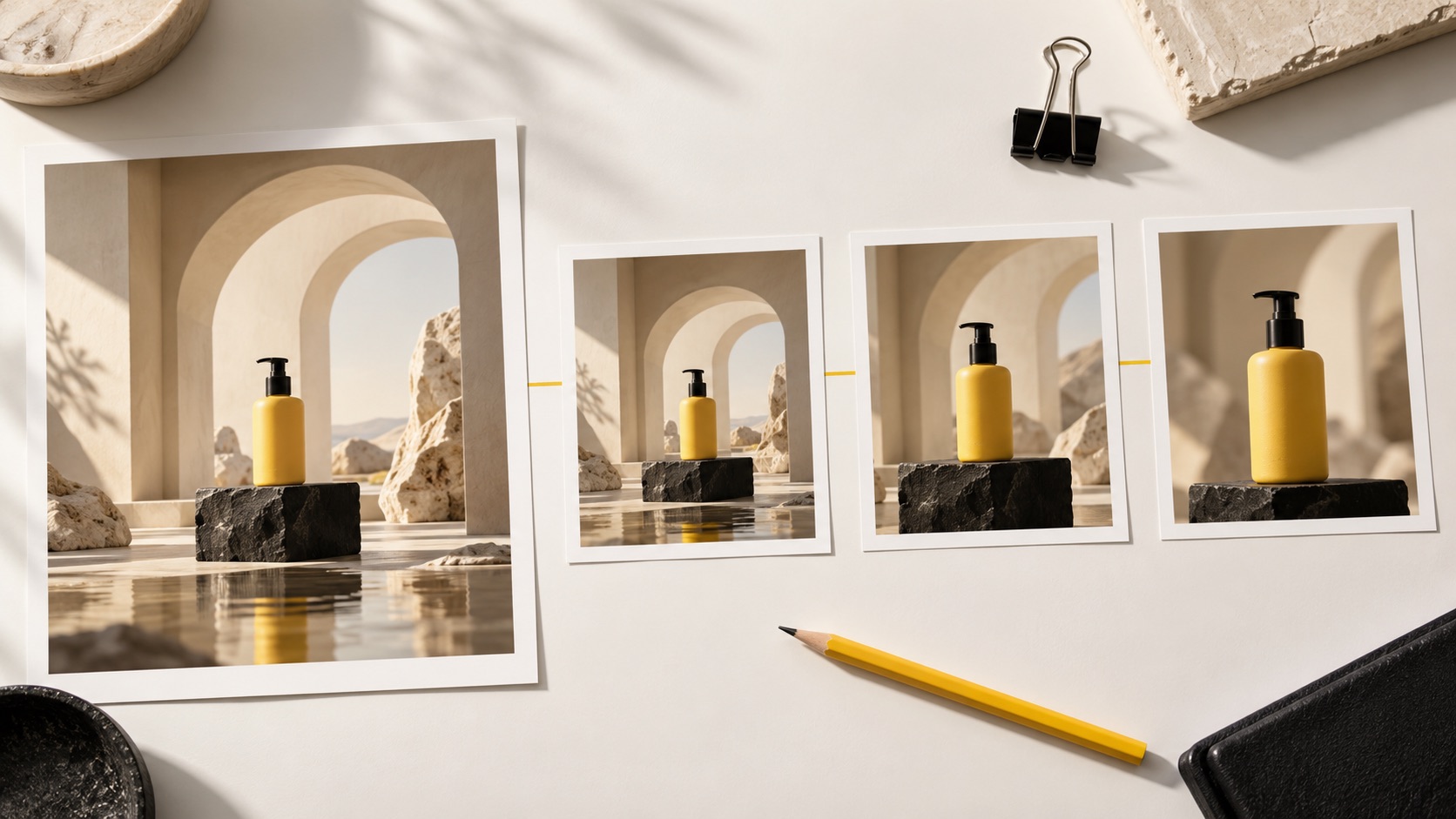
AI-generated storyboard illustration: agree the composition first, then test the camera move and continuity.
Budget for review and revisions, not just generation
A useful quote separates creative development, source capture, visual tests, generation, cleanup, finishing and versions. It should explain what counts as a revision and what happens when a shot needs a different method.
Build approval points around decisions: concept, reference frame, motion test and finished edit. Changing the environment after approval is different from correcting a defect in the agreed treatment. Keeping that distinction clear helps the brand compare proposals and keeps the production team working towards the same target.
Tool subscriptions and generation credits are only part of the cost. For example, Adobe documents separate generative credit requirements for premium video features. Factor in people’s time and the number of acceptable outputs, rather than dividing the subscription price by every clip generated.
Where does localisation fit?
Localisation works best as part of the brief. Decide which parts of the idea travel across markets and which need a different expression. Translation, dubbing and transcreation solve related but different problems: the words, the performance and whether the idea feels appropriate locally.
For Sage’s mentor series, we created AI characters in Sage’s offices and adapted them for different regions. Our AI video page includes the English and French teaser versions side by side. It is an example of a deliberately synthetic character workflow; it should not be confused with a recorded performance from a real employee.
Make the commercial decision before choosing the tools
If your team is experimenting internally, use the software and source material you can already handle well. Sidekick uses Adobe for specialist editing and compositing, while stock and music libraries can support a wider production workflow. Check each asset’s licence and the intended use before including it. Software access alone does not clear a person’s likeness, a voice or another party’s material.
For a brand commissioning a campaign, the more valuable question is whether the production can deliver the agreed idea consistently, across the required markets and formats. Ask to see the process and a representative test alongside the polished examples.
Talk to Sidekick about a hybrid video production brief. Bring the idea, fixed brand elements, deliverables and budget range. We can help decide which moments deserve a shoot, where generation adds value and how the final campaign will hold together.
See these approaches in practice in our portfolio: Stratiphy’s fully AI-generated “Great Timing” advert shows character-led commercial storytelling, while Sage’s AI mentor films show branded avatars and multilingual partner onboarding.


